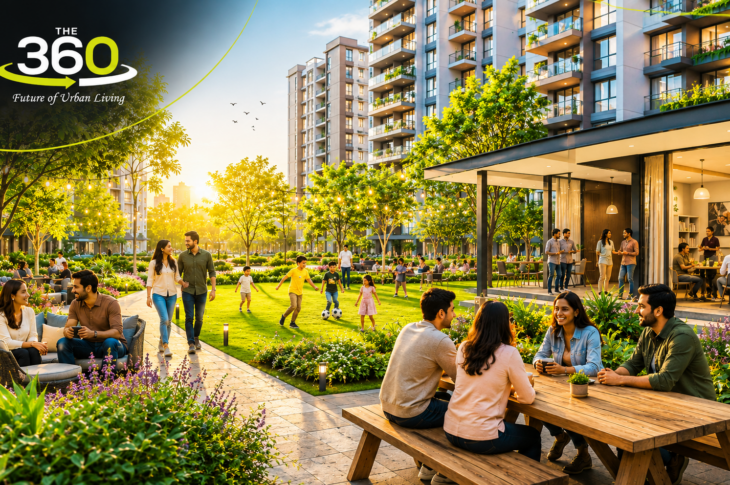
Why Residents Are Choosing Community Over Location in 2026
- 3 months ago |
- 0 comments
A few years ago, choosing a home was all about proximity. Residents prioritized shorter commutes, nearby schools, and access to commercial hubs.
While location is still an important factor, today’s residents and homebuyers are placing increasing value on the quality of everyday living within their community.
The reason is simple: modern gated communities are becoming significantly smarter.
Tasks that once relied on manual effort, paper records, and constant follow-ups are now being handled through intelligent automation. Visitor management, maintenance requests, financial operations, and resident communication are no longer time-consuming administrative challenges.
Instead, they are streamlined through technology that works quietly in the background to create a more convenient and connected living experience.
Let’s explore why community living is becoming a bigger priority than location in 2026.
Seamless Visitor Management Creates a Better First Impression
Traditional visitor management often involves phone calls, paper registers, and prolonged waiting times at the gate. Today, residential community management systems can pre-approve guests, maintain digital records, and instantly alert security teams to unusual activity.
For residents, this translates into faster guest entry, enhanced security, and a smoother living experience without unnecessary interruptions.
Predictive Maintenance Reduces Everyday Frustrations
One of the biggest reasons residents become dissatisfied with a community is delayed maintenance. Whether it’s a malfunctioning elevator, a leaking pipeline, or faulty lighting, unresolved issues can quickly affect quality of life.
Modern gated communities are increasingly adopting predictive maintenance tools that identify potential issues before they become major complaints. Repairs can be scheduled proactively, reducing downtime and ensuring common amenities remain operational.
As a result, residents experience fewer disruptions while management teams spend less time handling escalations.
Automated Financial Management Removes Administrative Hassles
Late invoices, missed reminders, and manual accounting processes have long been common pain points in residential communities.
In 2026, many communities are automating these processes. Maintenance invoices are generated on time, payment reminders are sent automatically, and financial reports are available instantly.
This not only improves operational efficiency but also promotes greater transparency and trust between residents and management teams.
Smarter Communication Builds Stronger Communities
Another reason residents are choosing community living over location is the growing importance of seamless communication.
Managing announcements, emergency alerts, event updates, and resident notifications can be overwhelming when handled manually. AI-driven communication systems ensure that the right information reaches the right residents at the right time.
Whether it’s a maintenance update, security alert, or community event announcement, communication becomes more timely, relevant, and effective.
This helps community management apps create a more connected, informed, and engaged resident experience.
The Results Residents Actually Notice
The impact of these innovations is far beyond convenience. Communities embracing intelligent technology are already seeing measurable improvements:
- Fewer resident complaints
- Faster maintenance resolution
- Significant time savings for management teams
- Better security and visitor experiences
- Improved resident satisfaction and retention
When residents experience smoother daily operations, responsive management, and greater convenience, the importance of being close to a city center naturally begins to diminish.
Top Community Living Trends Shaping Homebuyer Decisions in 2026
As residential expectations continue to evolve, several broader trends are influencing how homebuyers evaluate communities.
Community-First Living
Homebuyers are increasingly prioritizing the overall living experience over a prestigious address. A well-managed community with strong amenities and engagement often holds greater appeal than a prime location alone.
Smart Community Ecosystems
Technology is no longer viewed as an added benefit. Buyers now expect communities to offer digital solutions for visitor management, maintenance requests, payments, and resident communication.
Security as a Lifestyle Requirement
Advanced access control, digital visitor approvals, and real-time monitoring have become essential considerations for modern homebuyers seeking peace of mind.
Greater Focus on Resident Engagement
Community events, resident apps, and digital communication channels are helping foster stronger social connections and a greater sense of belonging.
Sustainable and Future-Ready Communities
Homebuyers are showing increased interest in communities that embrace sustainability through efficient resource management, waste reduction initiatives, and environmentally responsible practices.
These trends reflect a larger transformation in residential living. Today’s buyers are not simply searching for a house in a desirable location. They are investing in communities that can deliver convenience, security, connection, and long-term quality of life.
Summing Up: The Homebuyer’s Checklist Has Changed
Not long ago, homebuyers evaluated a property based primarily on its location. Proximity to workplaces, schools, shopping centers, and transportation networks often determined the final decision.
In 2026, however, the checklist looks very different.
Buyers are asking questions such as:
- How responsive is the residential community management team?
- Is resident communication transparent and efficient?
- How secure is the community?
- Are amenities properly maintained?
- Does the community use technology to simplify daily life?
- Will this be a comfortable place to live for years to come?
The growing popularity of hybrid work models, digital services, and community-focused lifestyles has made residents less dependent on living close to city centers. Instead, they are prioritizing convenience, safety, engagement, and quality of life within the community itself.
As a result, a well-managed community in a developing location can often be more attractive than a poorly managed property in a prime area. For many buyers, the value of everyday living now outweighs the value of a prestigious address.
The future of residential living is no longer defined solely by where a property is located; it is defined by better residential community management.
Related Posts
Categoris
-
Gated Community
3 -
Housing Society
4 -
Security
3 -
Society Management
4
Latest Posts
- 3 months ago |
- 0 comments
- 1 year ago |
- 0 comments
- 1 year ago |
- 0 comments
- 1 year ago |
- 0 comments